Popular fittings › The octopus manifold
The octopus manifold
Six radial branches and one inlet; each branch can point in three dimensions. Free 3D printable manifold.
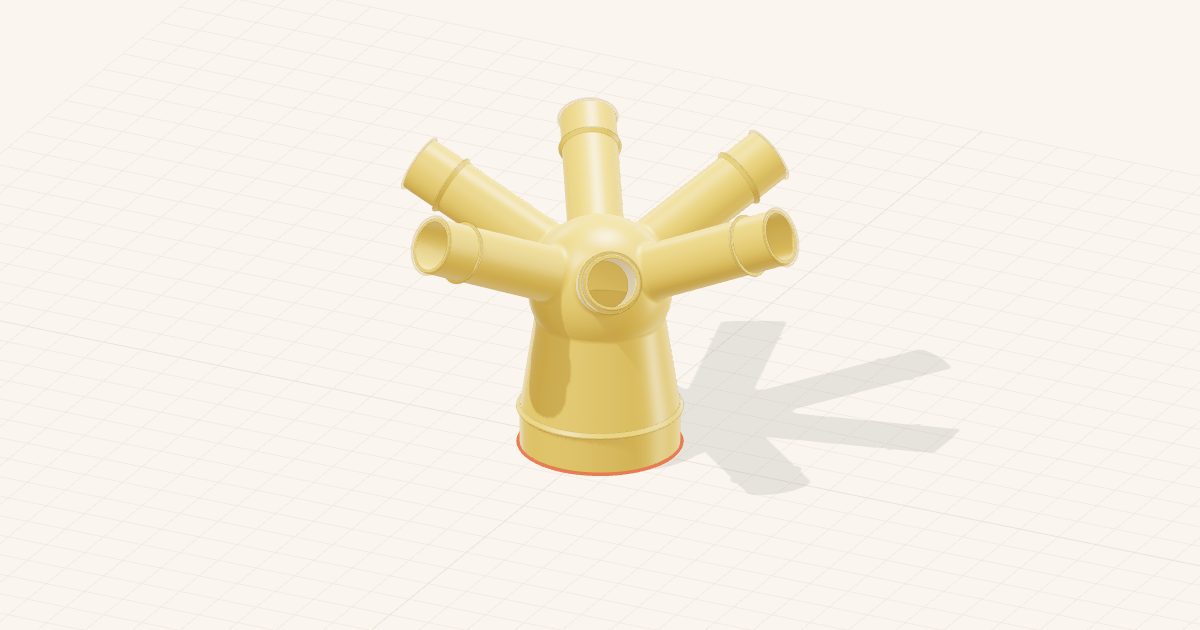 Open in the designer →
Opens with the sizes below. Change anything, then export 3MF, STL or STEP. Free, no account, runs in your browser.
Starting sizes
| End | Inner size | Connection |
|---|---|---|
| Inlet | 100 mm (3.94 in) | Smooth sleeve |
| Arm 1 | 32 mm (1.26 in) | Smooth sleeve |
| Arm 2 | 32 mm (1.26 in) | Smooth sleeve |
| Arm 3 | 32 mm (1.26 in) | Smooth sleeve |
| Arm 4 | 32 mm (1.26 in) | Smooth sleeve |
| Arm 5 | 32 mm (1.26 in) | Smooth sleeve |
| Arm 6 | 32 mm (1.26 in) | Smooth sleeve |
Need another size? Every dimension is editable in the designer, in millimetres or inches.
What it is
One inlet with six branches, each aimed independently in three dimensions.
How to measure
For each end, measure the hose, pipe or port it joins with calipers. If that part slides into the fitting, measure its outside diameter and keep “Measure by: Inner diameter”. If the fitting slides into a hose, measure the hose’s inside diameter and switch to “Outer diameter”. Measure twice across the circle; flexible hose is rarely perfectly round.
Print tips
- The export already places every component in its recommended print orientation. Keep supports off sleeves, sockets and any sliding or tight-fit surface so they stay smooth; if your slicer asks for supports, paint them only where an outside overhang needs them.
- Use 3–4 perimeters for an airtight wall; infill matters much less than wall count for ducts.
Frequently asked questions
- What size should I measure?
- For each end, measure the hose, pipe or port it joins with calipers. If that part slides into the fitting, measure its outside diameter and keep “Measure by: Inner diameter”. If the fitting slides into a hose, measure the hose’s inside diameter and switch to “Outer diameter”. Measure twice across the circle; flexible hose is rarely perfectly round.
- What should I print it in?
- PLA or PETG both work for dust collection at room temperature. Print in PETG or ASA if the air is warm or the part sits in the sun. Use 3–4 perimeters for an airtight wall; infill matters much less than wall count for ducts.
- What hardware do I need to buy?
- Nothing is required at these starting sizes: it prints in one piece. A hose clamp is optional if a hose feels loose.
- Does it need supports?
- The export already places every component in its recommended print orientation. Keep supports off sleeves, sockets and any sliding or tight-fit surface so they stay smooth; if your slicer asks for supports, paint them only where an outside overhang needs them.
More popular fittings
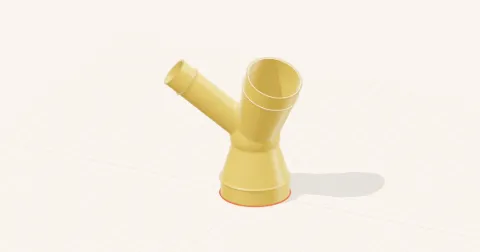 Off-axis Y junctionAn asymmetric, three-dimensional junction for awkward spaces. Free 3D printable, every angle adjustable.
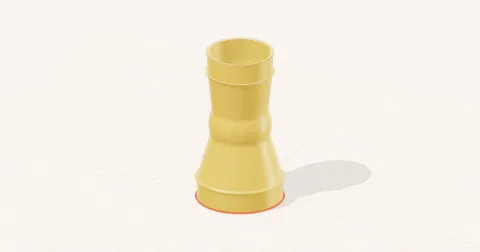 Build your own fittingStart from a port graph and add up to eight independent ports. Design an unusual 3D printable fitting.
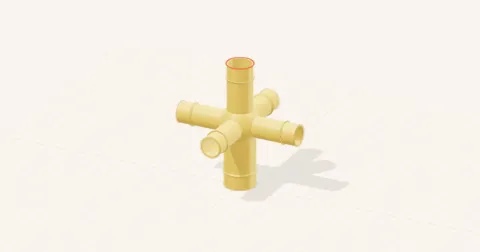 Six-axis manifoldIndependent branches on all six spatial axes. A free 3D printable manifold, every port adjustable.
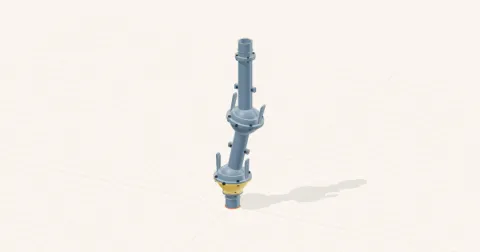 Articulated pickup armSplit retainers capture hollow spherical joints; adjust each segment independently. Free 3D printable.
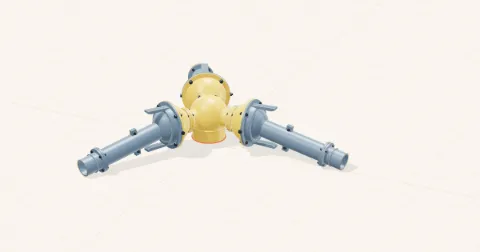 Poseable vacuum octopusA manifold with independently aimed captive pickup arms and interchangeable tips. Free 3D printable.
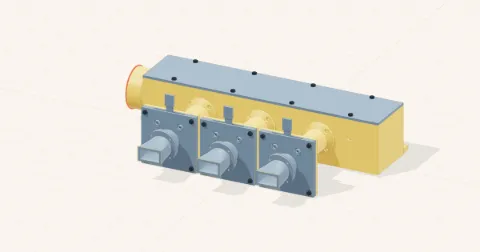 Bench-edge cleanup railA bench-mounted pickup manifold with independently captive shutoffs. Free 3D printable.